Zeytince is an İzmir-based civil society organisation working in the fields of agroecology, rural development, sustainable food systems, circular economy, living labs, ecological literacy, sustainable living, the climate crisis and cultural heritage. As a partner in the European Union's Horizon programmes, we share what we learn locally on a European and global scale.
Everything we've learned is rooted in the soil.
"A community movement rooted in olive culture, local food systems and the cultural landscape of the Aegean Peninsula."
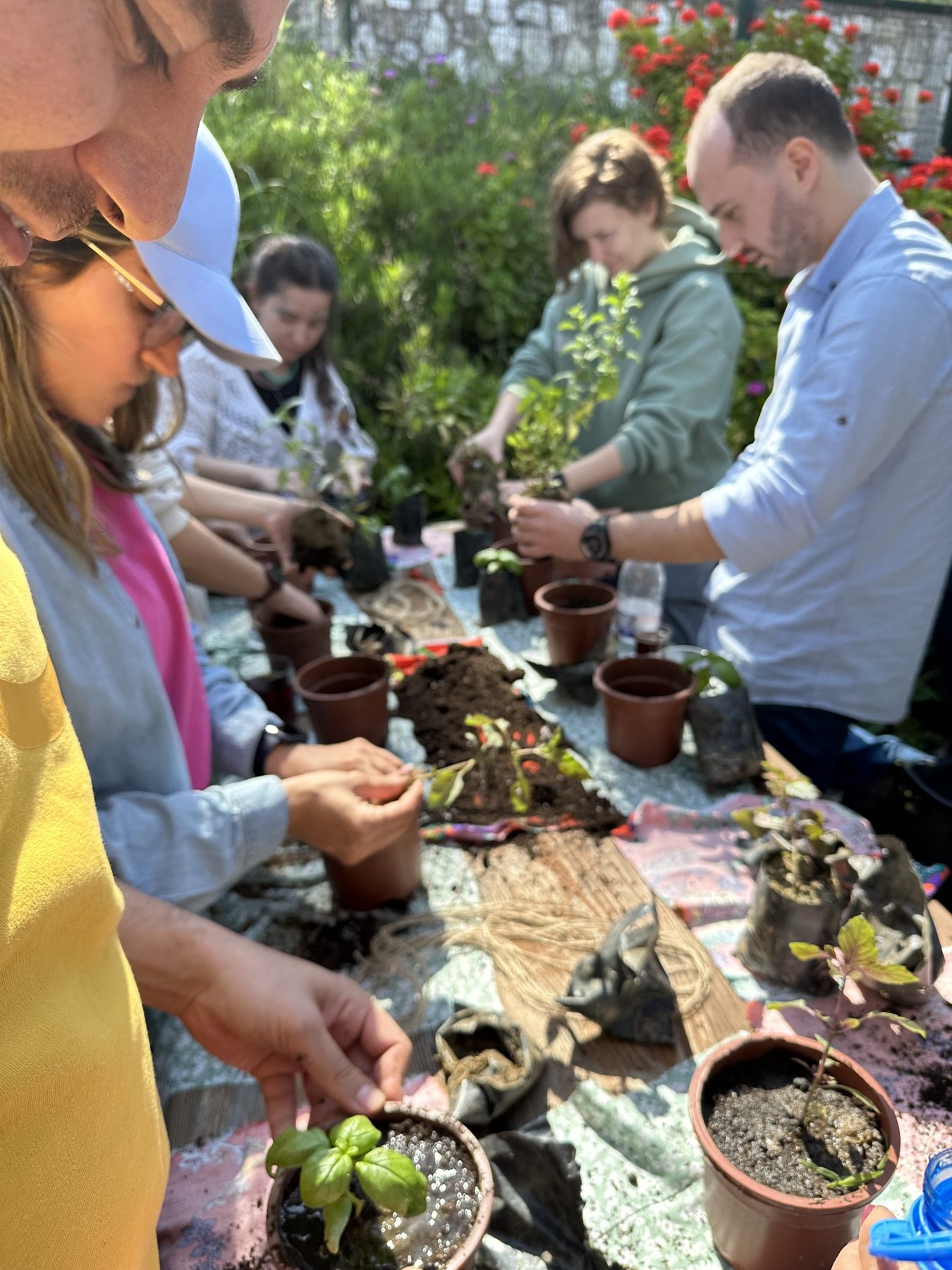
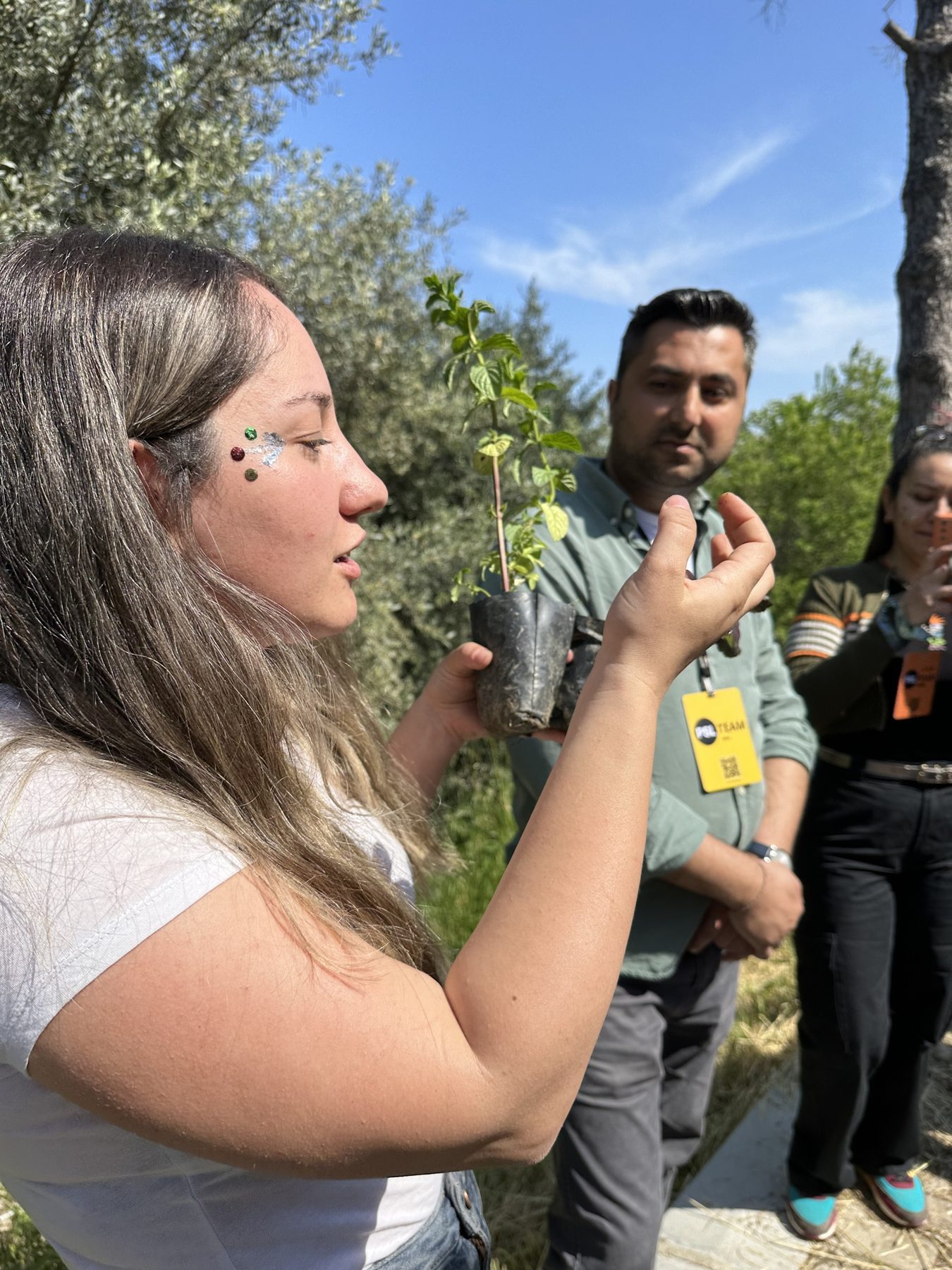
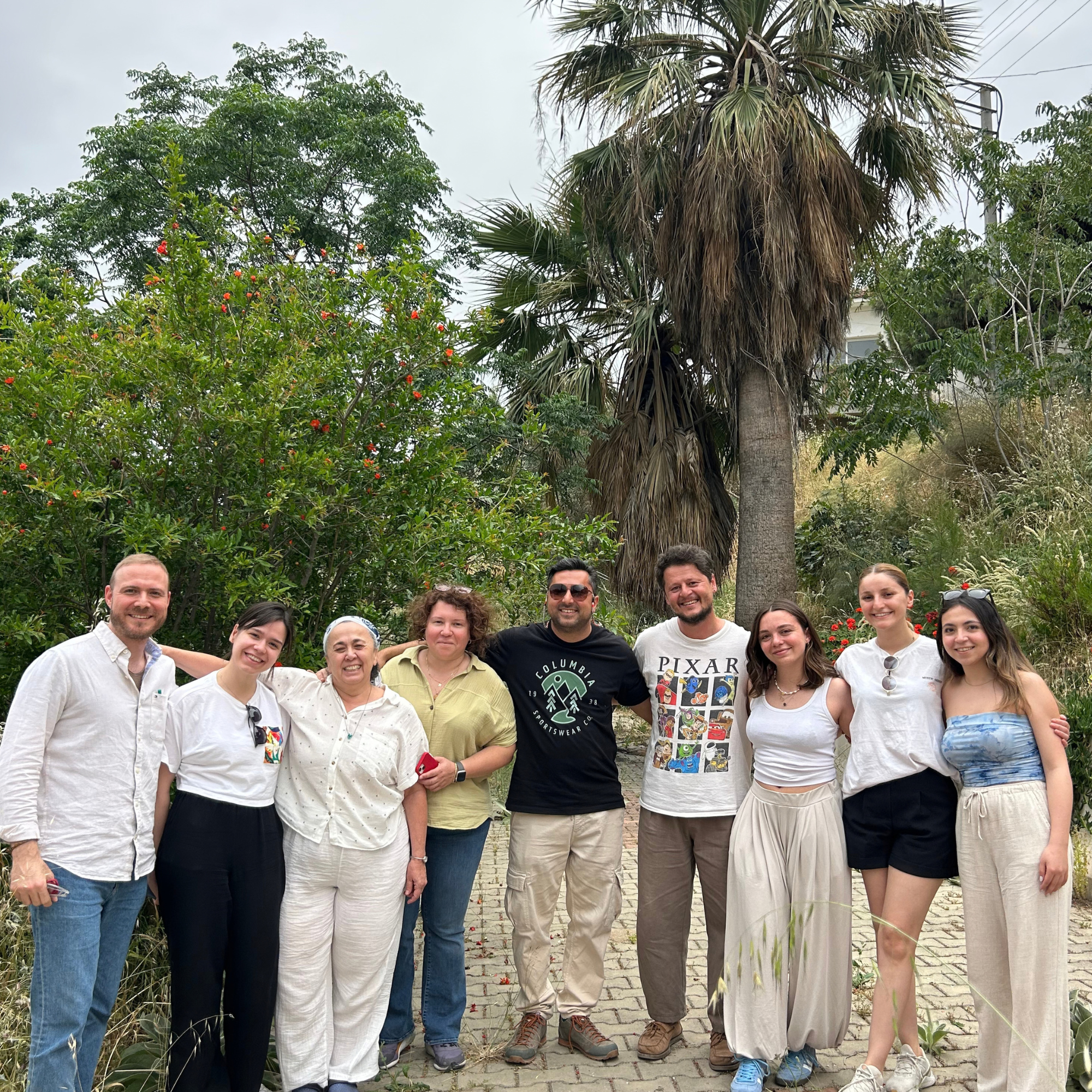
Founded in İzmir in 2013, Zeytince is a community-based association working at the intersection of ecological literacy, cultural heritage, sustainable lifestyles and agroecology. As a partner in projects under the EU's Horizon Europe and Horizon 2020 programmes, we bring together local producers, municipalities, universities and civil society through participatory learning and Living Lab methods. Our Zeytin Okulu in Karaburun works as a community learning hub for olive culture, agroecology, biodiversity and ecological literacy.
Our purpose is to support ways of living in harmony with nature, to strengthen local knowledge and co-creation, and to contribute to a participatory, inclusive sustainability transition. We see the climate crisis not only as an environmental issue but as a social, cultural and economic one - and we support individuals, communities and institutions in learning and acting together.
We take the mutual bond between people and nature as our starting point, respecting ecological limits in all our work.
We believe sustainable solutions are only possible when different kinds of knowledge and experience come together.
We treat local knowledge and cultural heritage as essential ingredients of sustainable transformation.
We bring academic knowledge together with field experience to produce practical, measurable solutions.
We build strong partnerships with public bodies, local governments, producers, universities and civil society.
Through Living Lab practices and co-design processes, we learn from experience and develop new methods.

A European project keeping cultural heritage and mutual aid alive in olive villages.
Runs Türkiye's Cultural Commons Lab in the Karaburun/Urla olive landscape, connecting imece (mutual aid), participatory governance and heritage safeguarding with agroecological transformation - with İzmir Institute of High Technology.
Official project page →
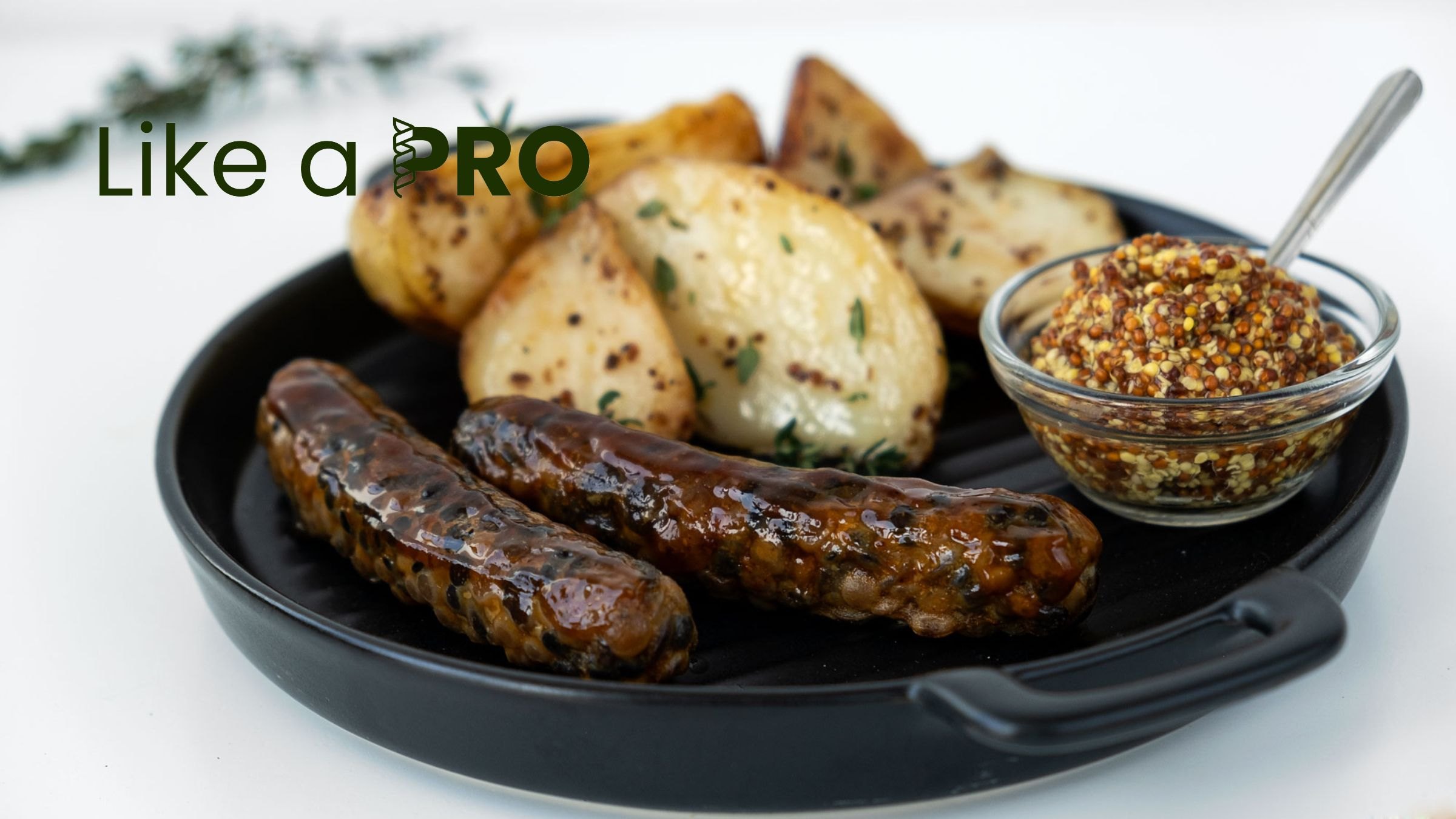
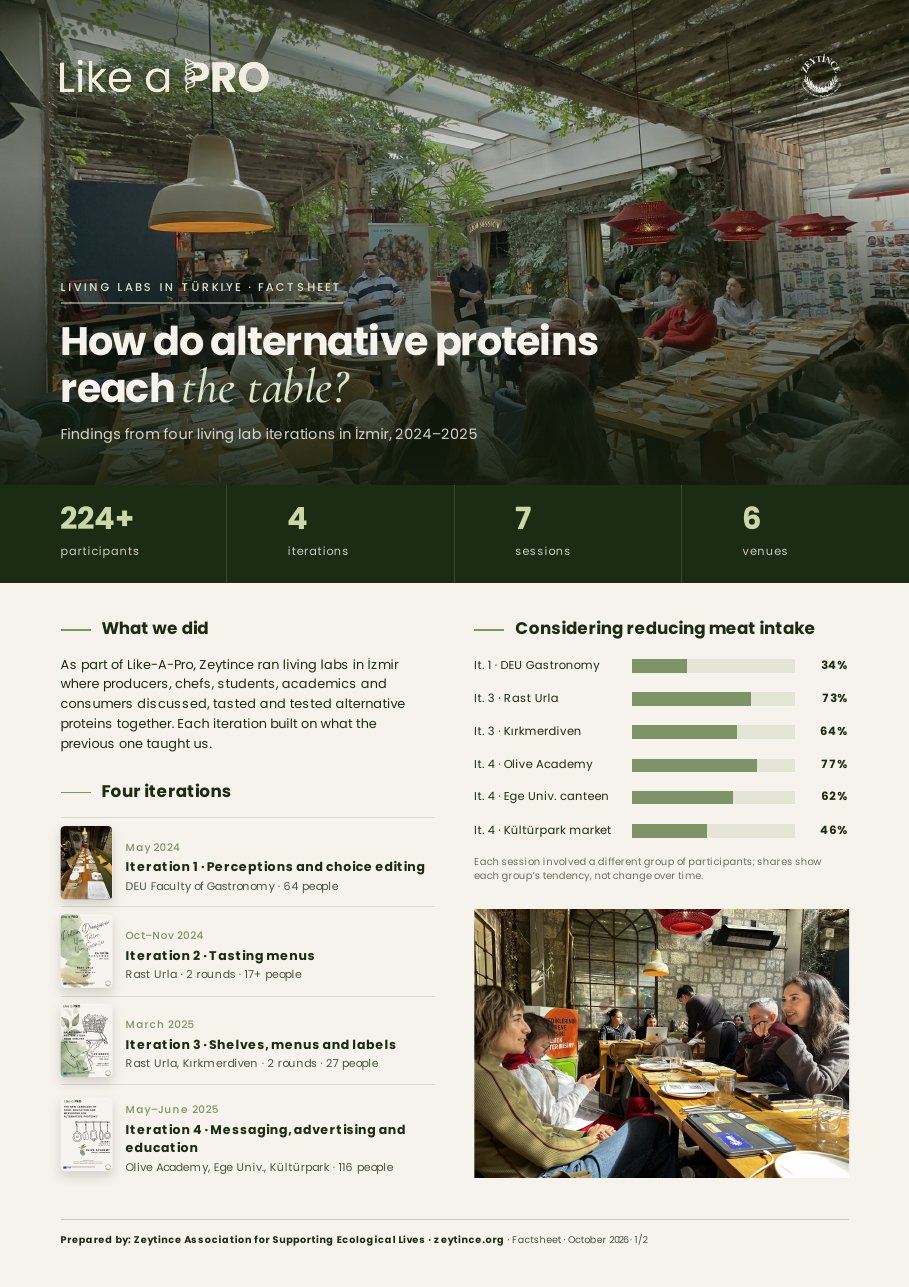
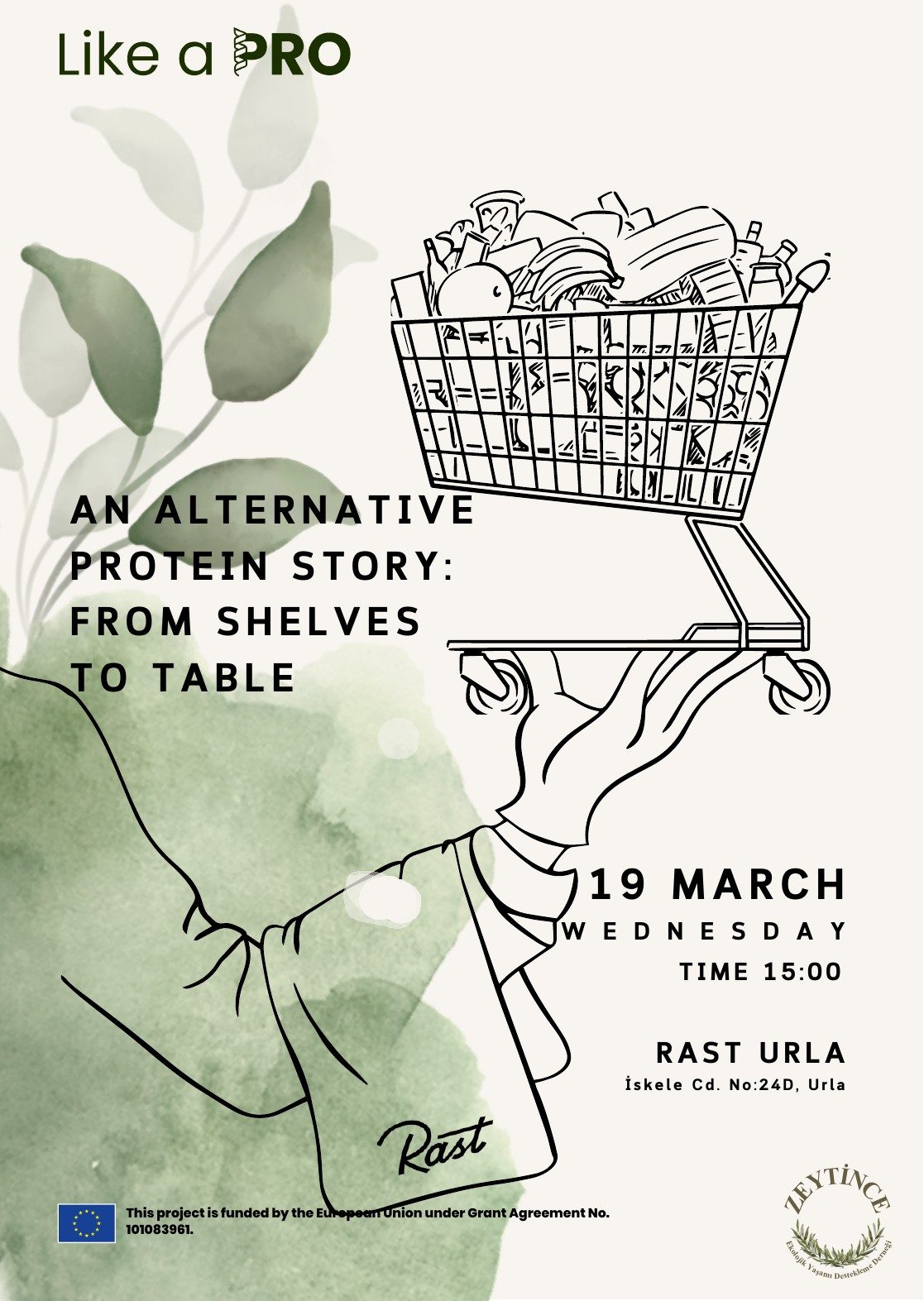
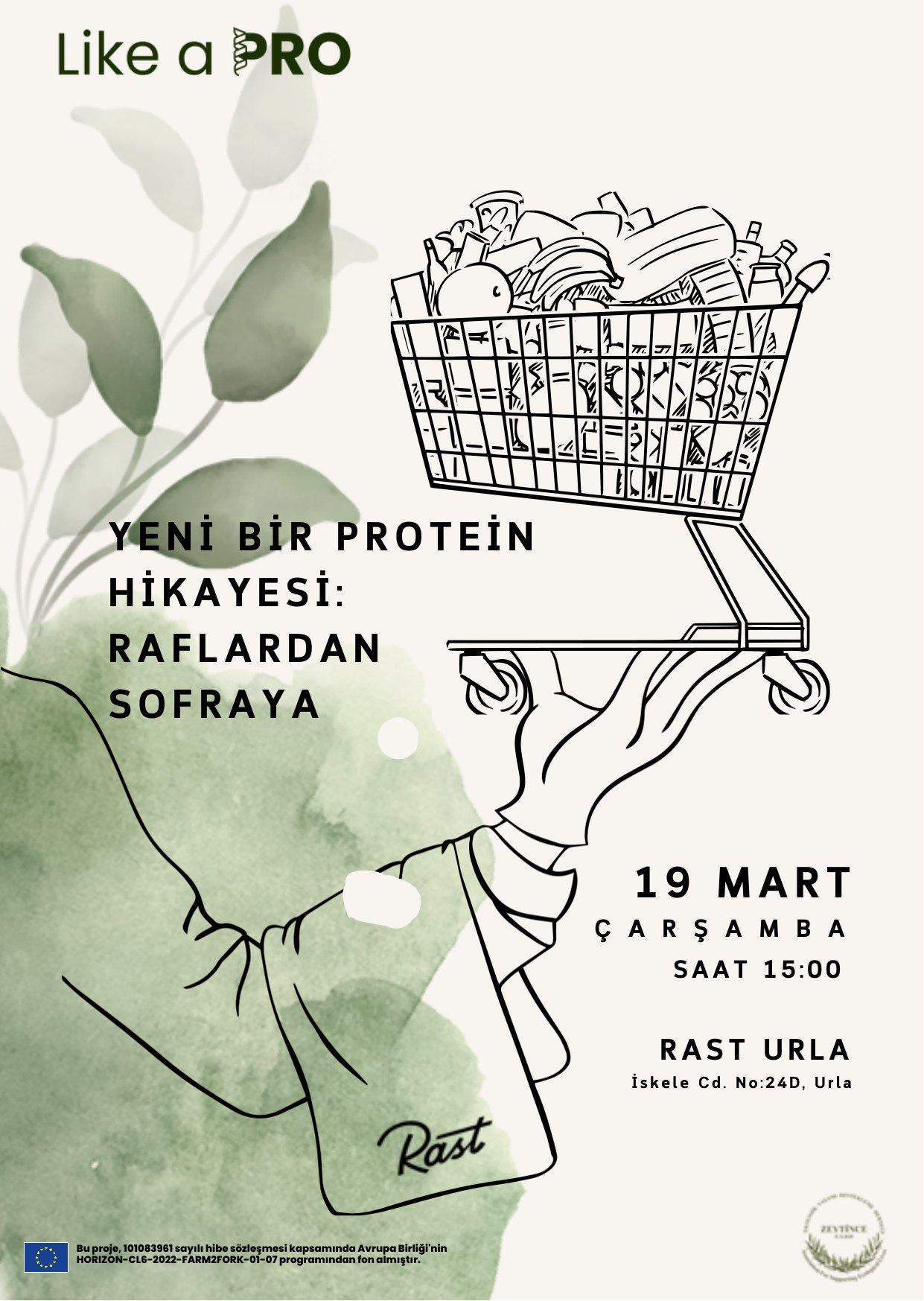
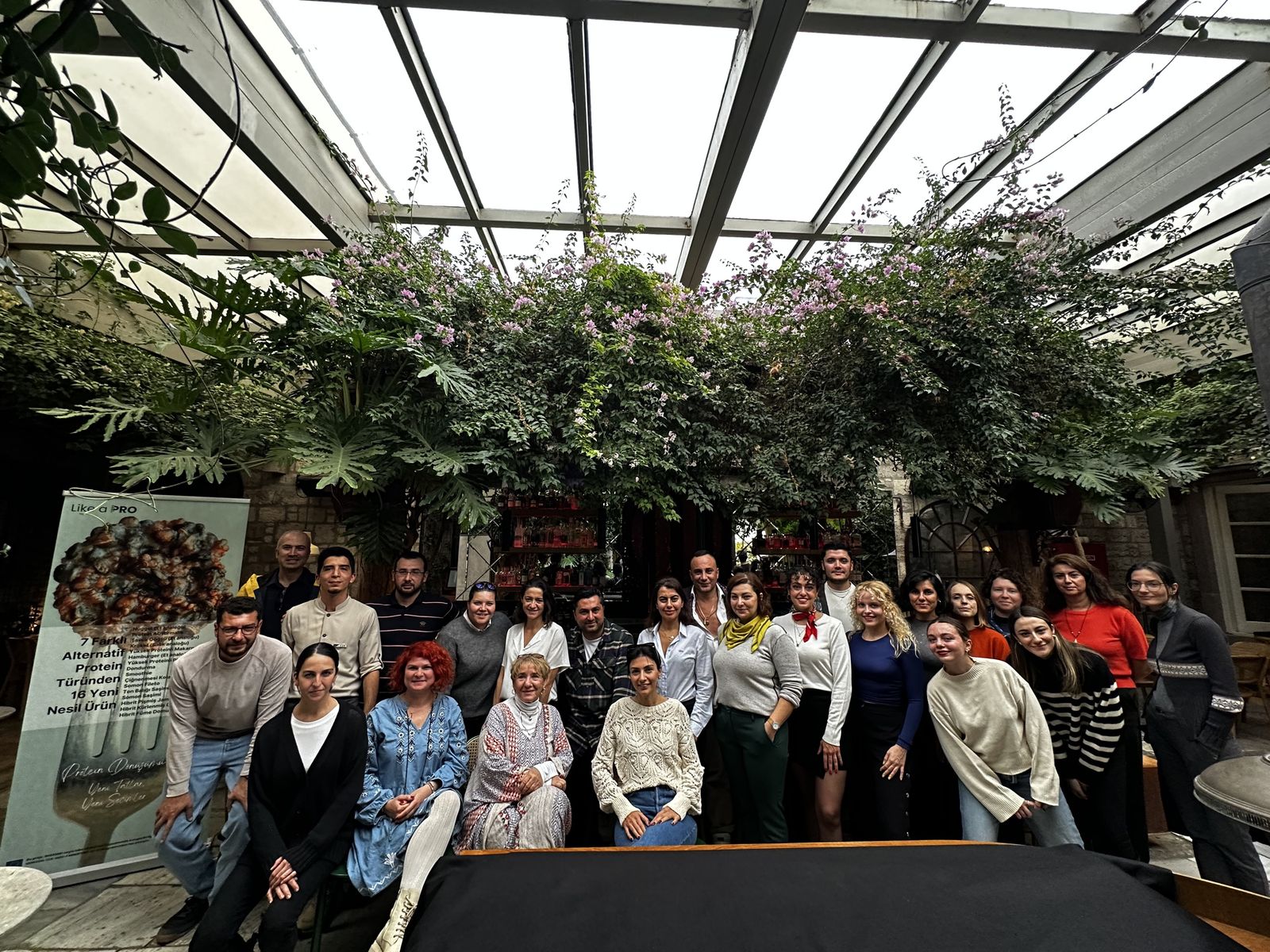
A European research project bringing plant-based protein to the table.
42 partners, 14 countries: an EU-funded research and innovation project moving alternative proteins from niche to mainstream.
Official project page →
A free test that shows the carbon footprint of your daily life.
Run in 8 European countries: a free web app measuring personal carbon footprint and offering sustainable-lifestyle guidance.
Official project page →
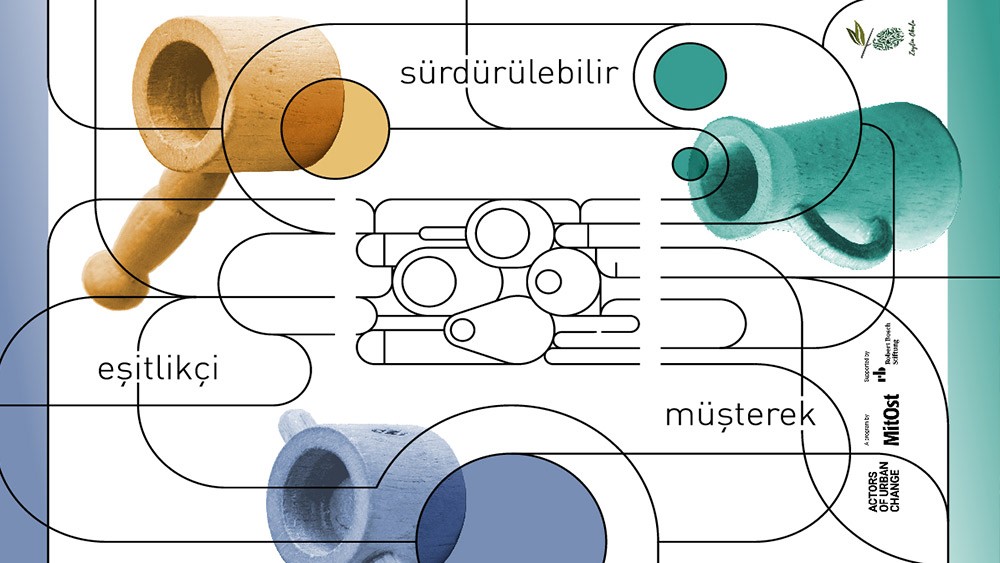
A food movement questioning the journey from seed to table.
A movement examining the seed-to-table food cycle in search of a shared, equitable food ecosystem.
Official project page →
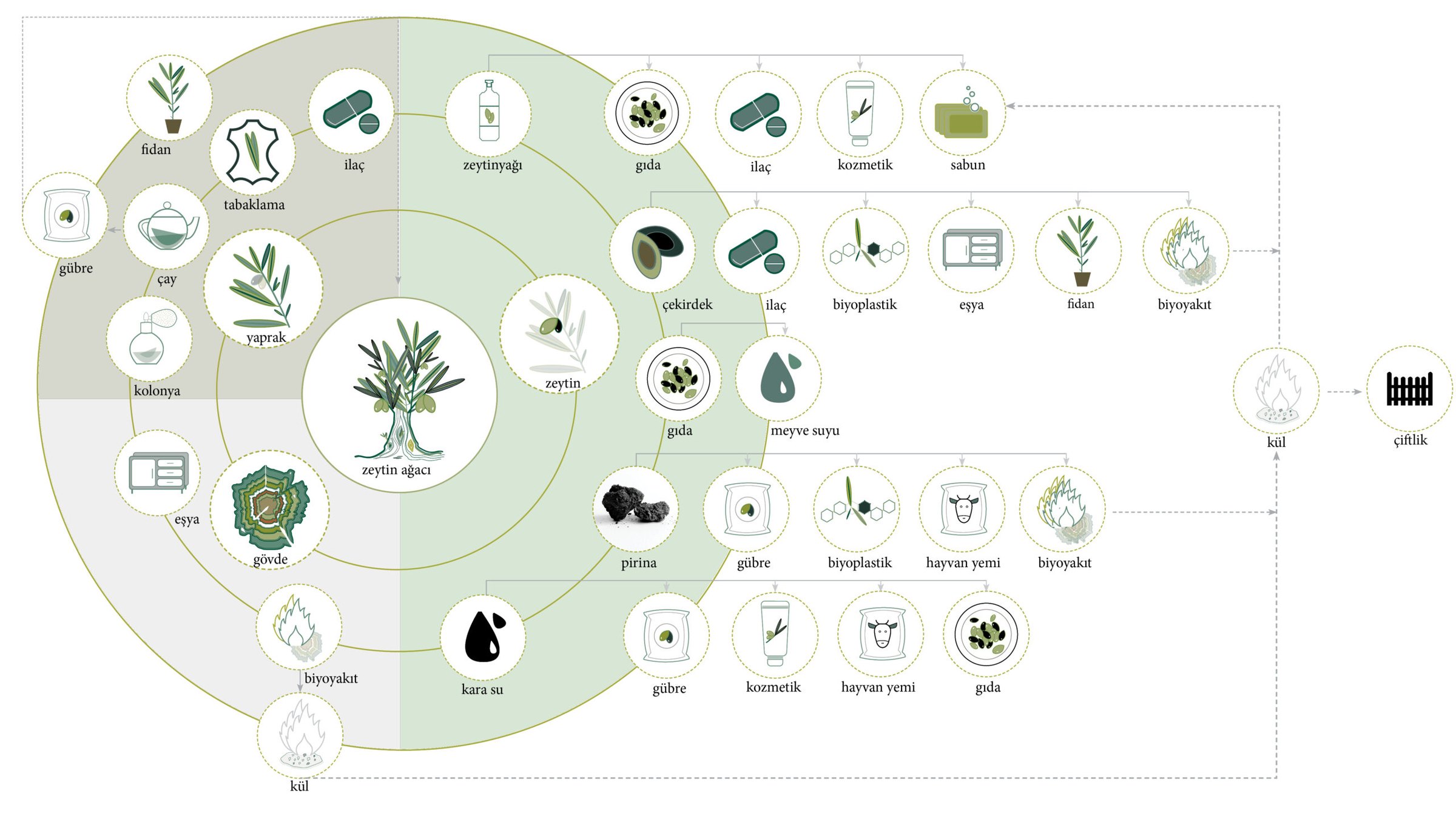
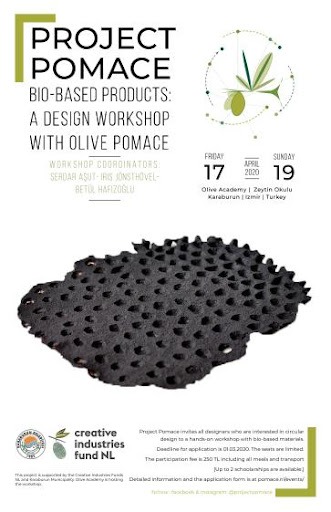
A creative-industries project designing new circular materials from olive pomace.
Inspired by olive cultivation in Karaburun: a creative-industries project turning olive pomace into bio-based materials through circular design.
Official project page →
Connecting olive culture and producers along a route you can visit.
A route linking olive culture, agroecology, local producers and eco-cultural tourism across the İzmir Peninsula.
Official project page →
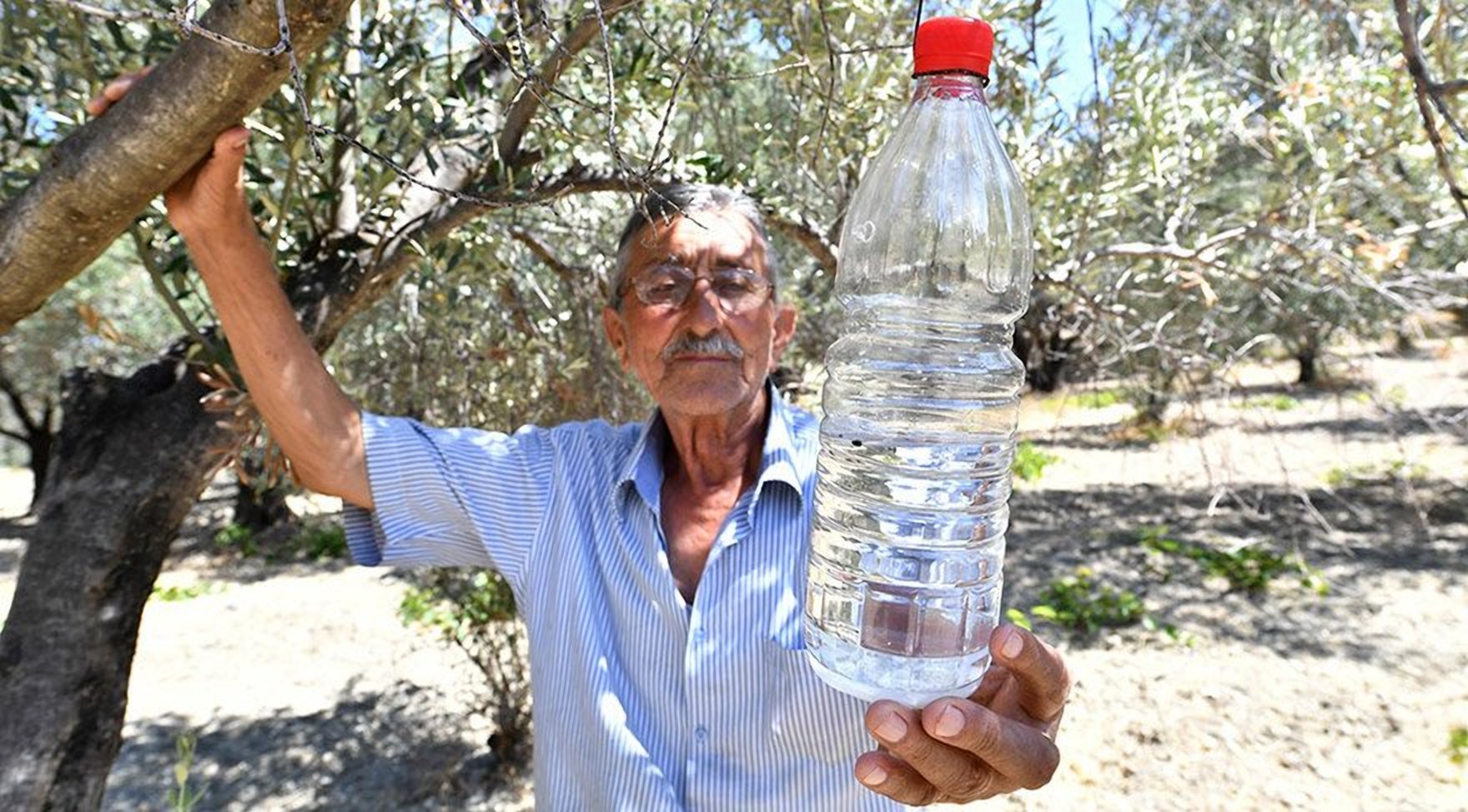
A chemical-free pest-control method developed together with producers.
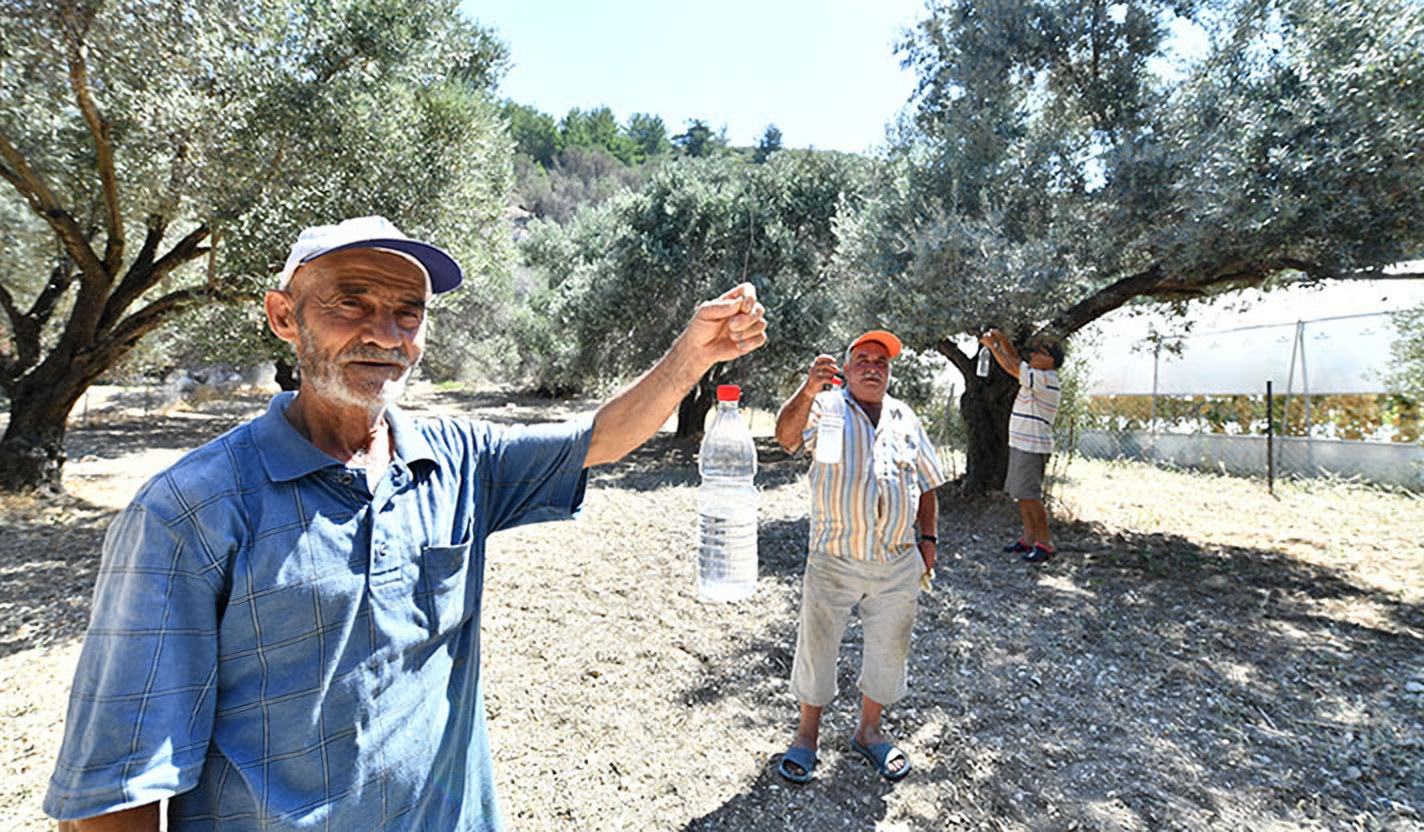
A project with olive producers to spread ecological pest-control methods that reduce chemical inputs.
Official project page →An eight-month ecological literacy education project in Karaburun, led by Ege University's Faculty of Economics under the TÜBİTAK 4004 Nature Education and Science Schools programme.
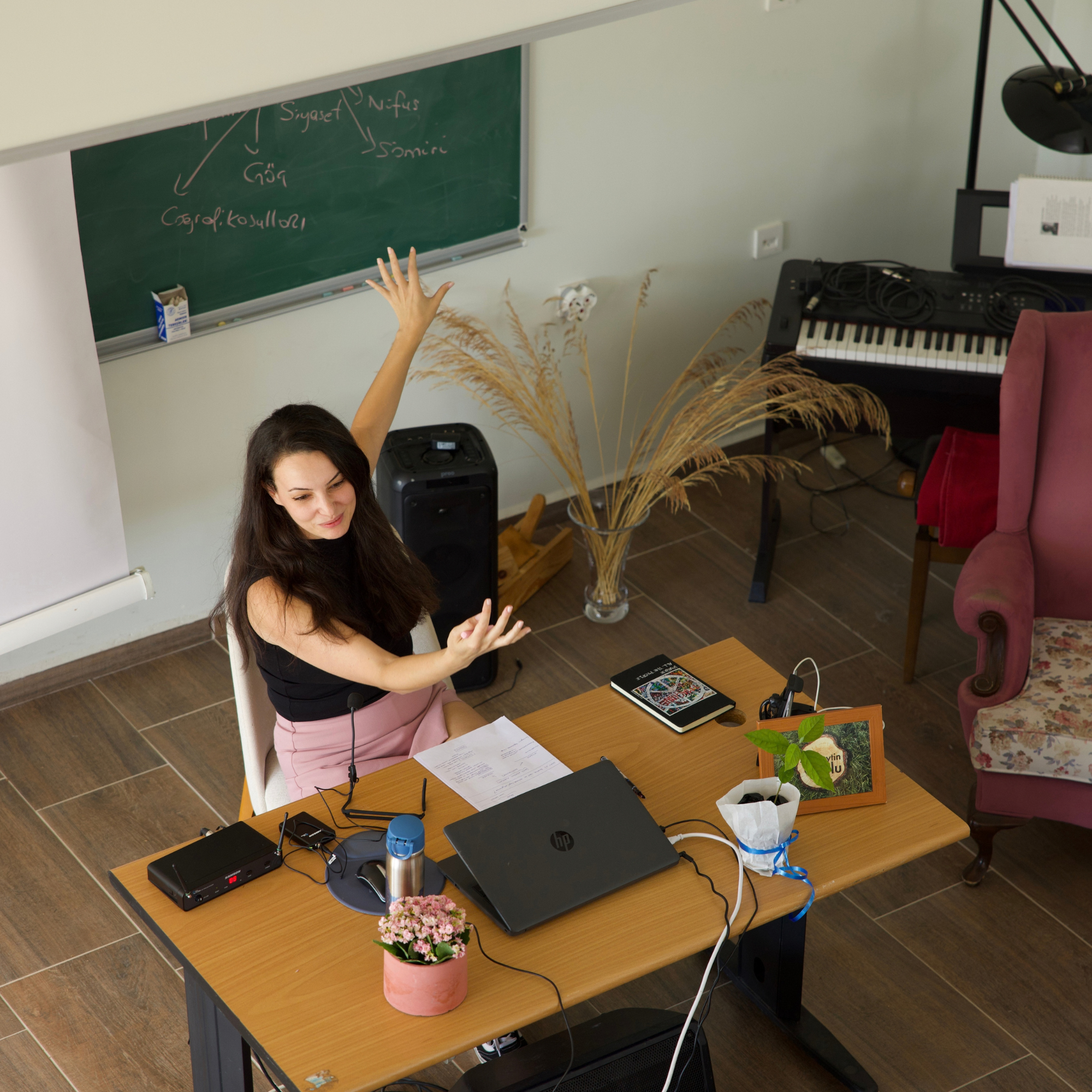
Project page →
Our co-founder Assoc. Prof. Meneviş Uzbay Pirili received the Yves Rocher Foundation's "Woman of the Soil" award for her ecological literacy education work in İzmir.
Read the news →
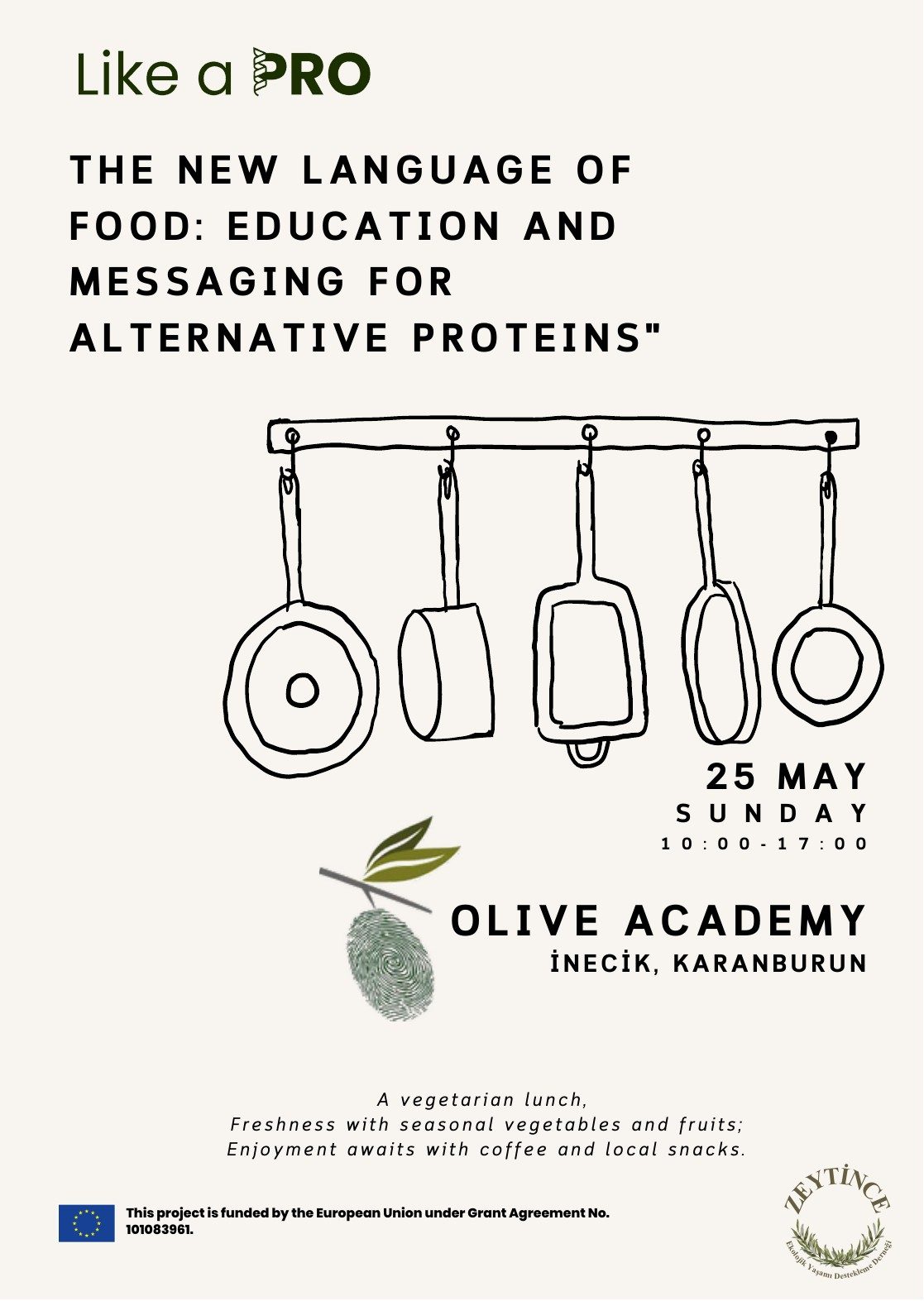
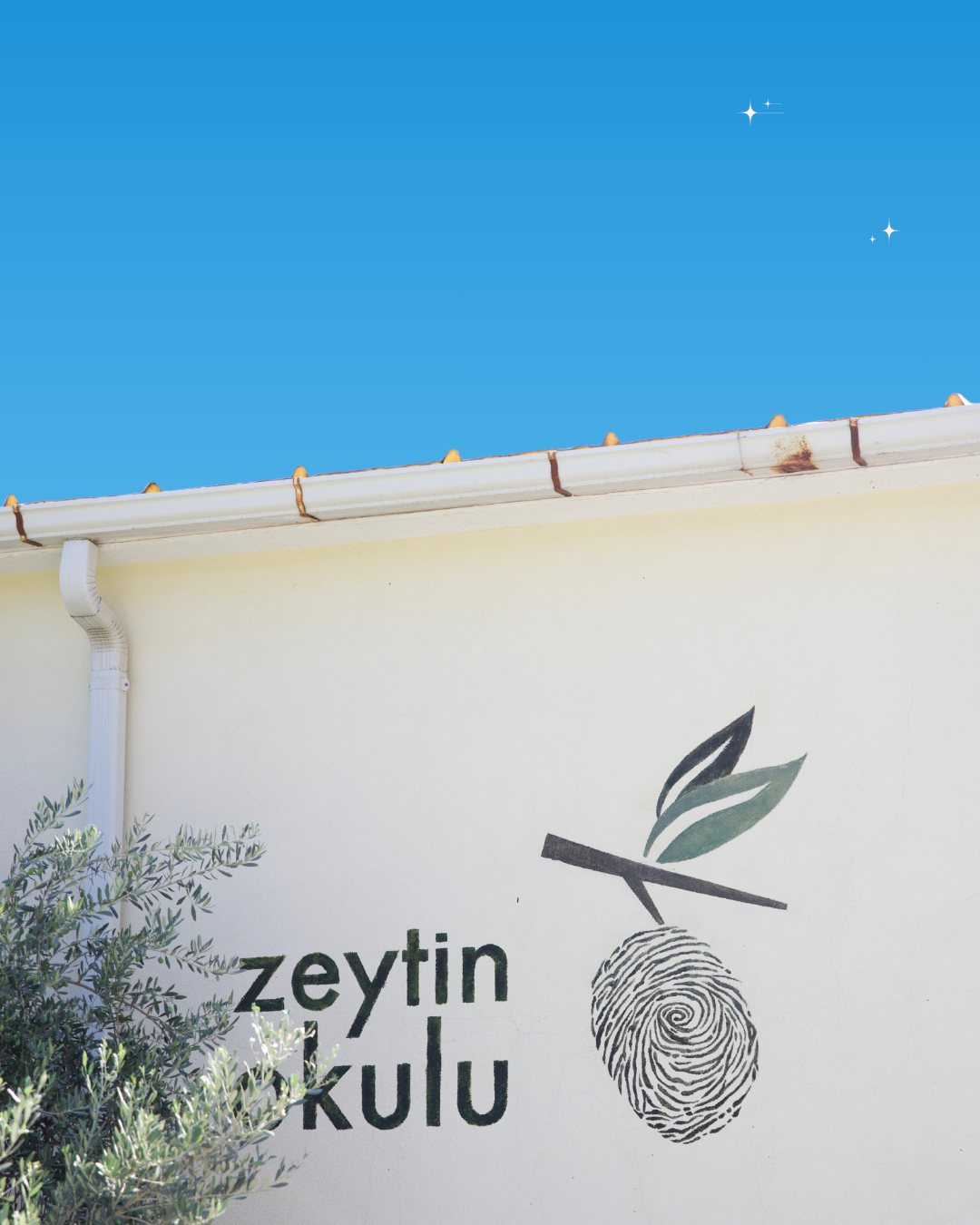
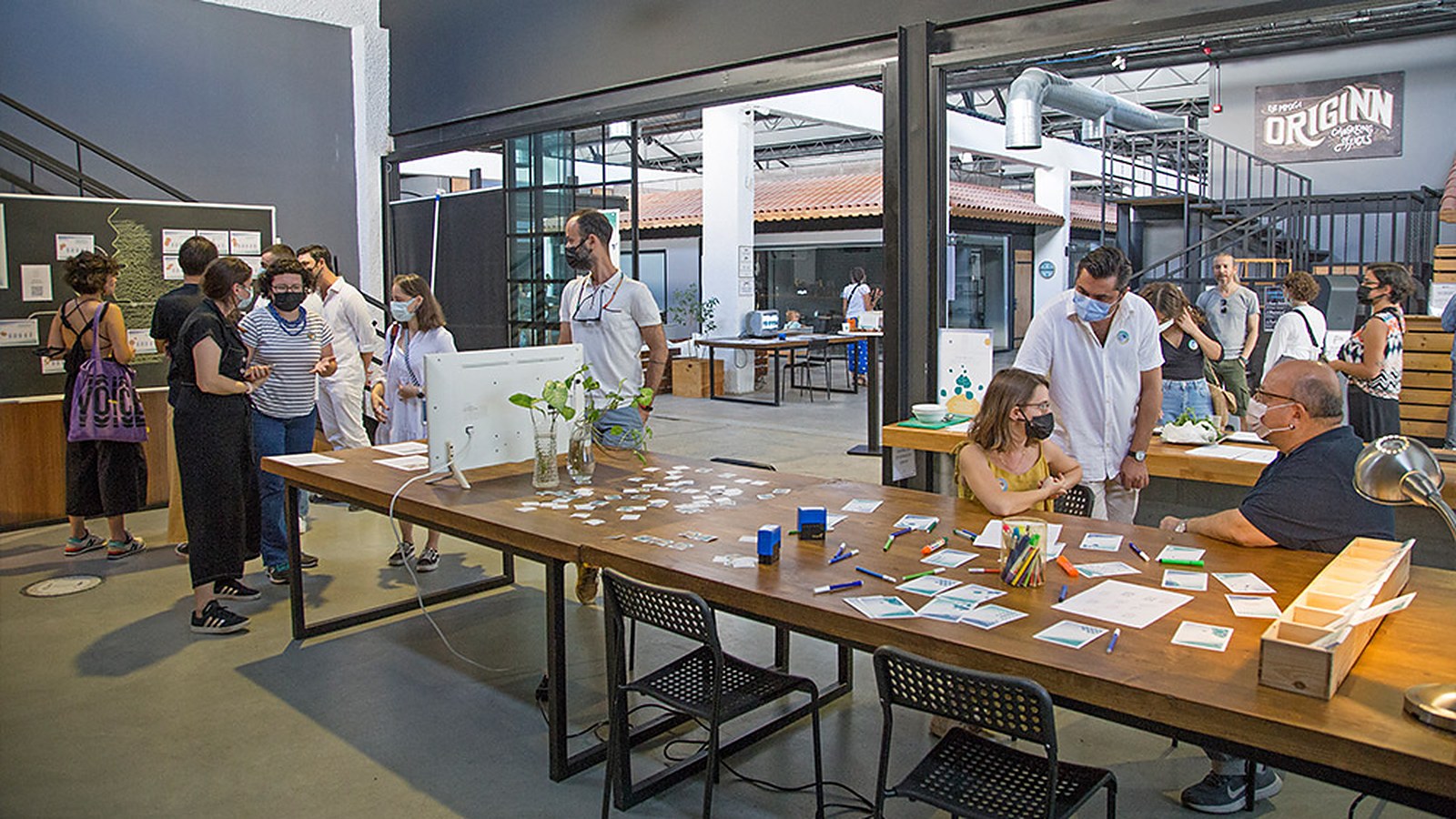
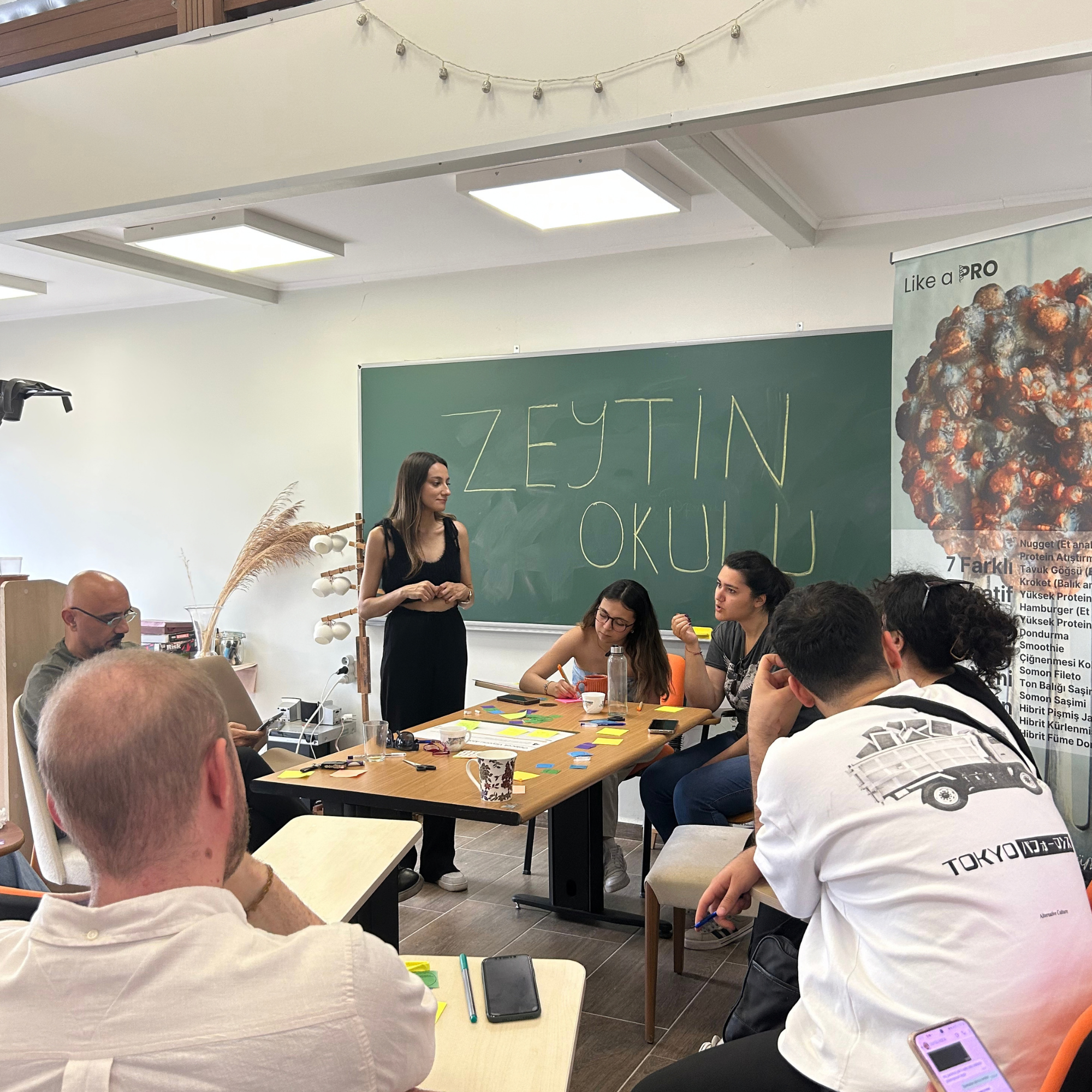
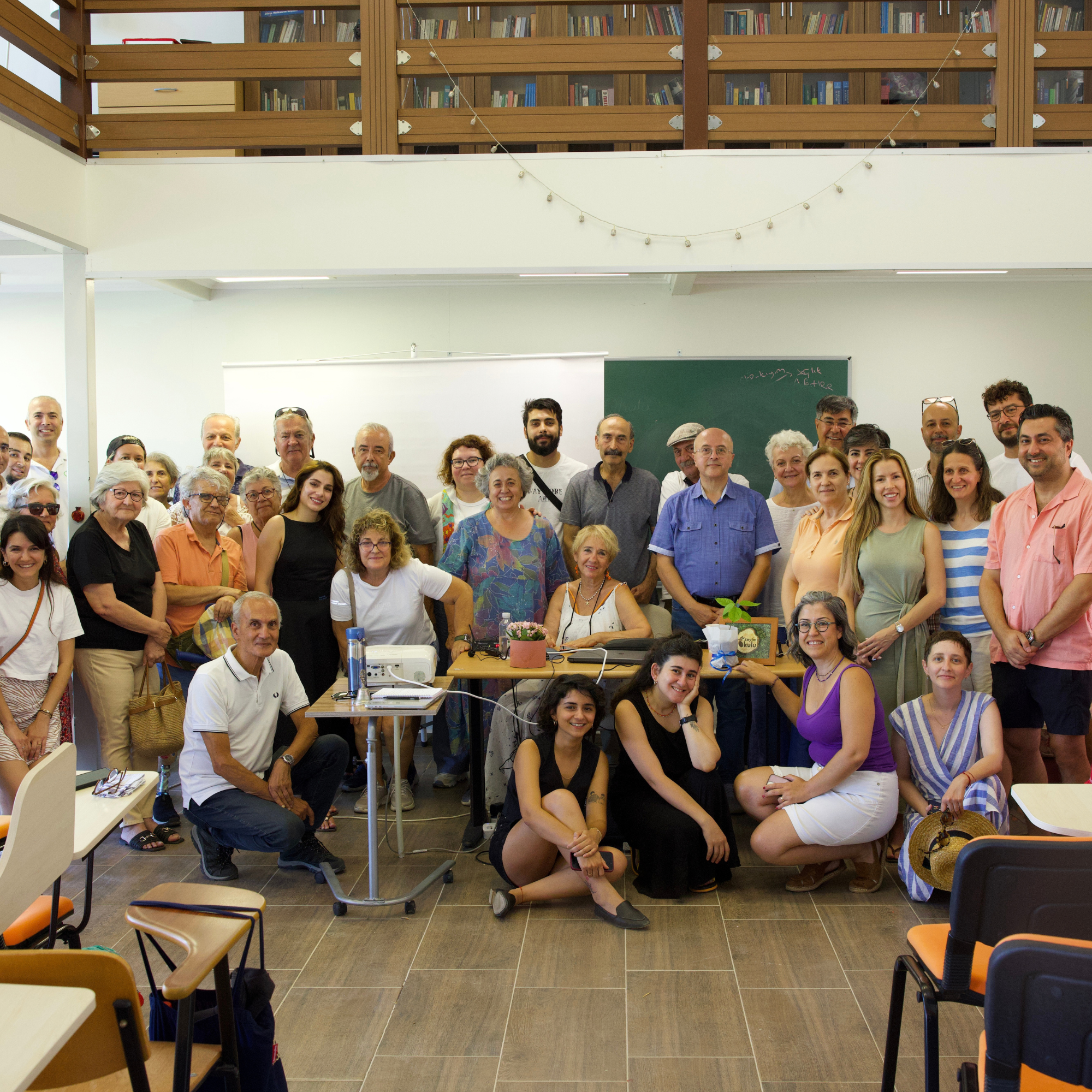
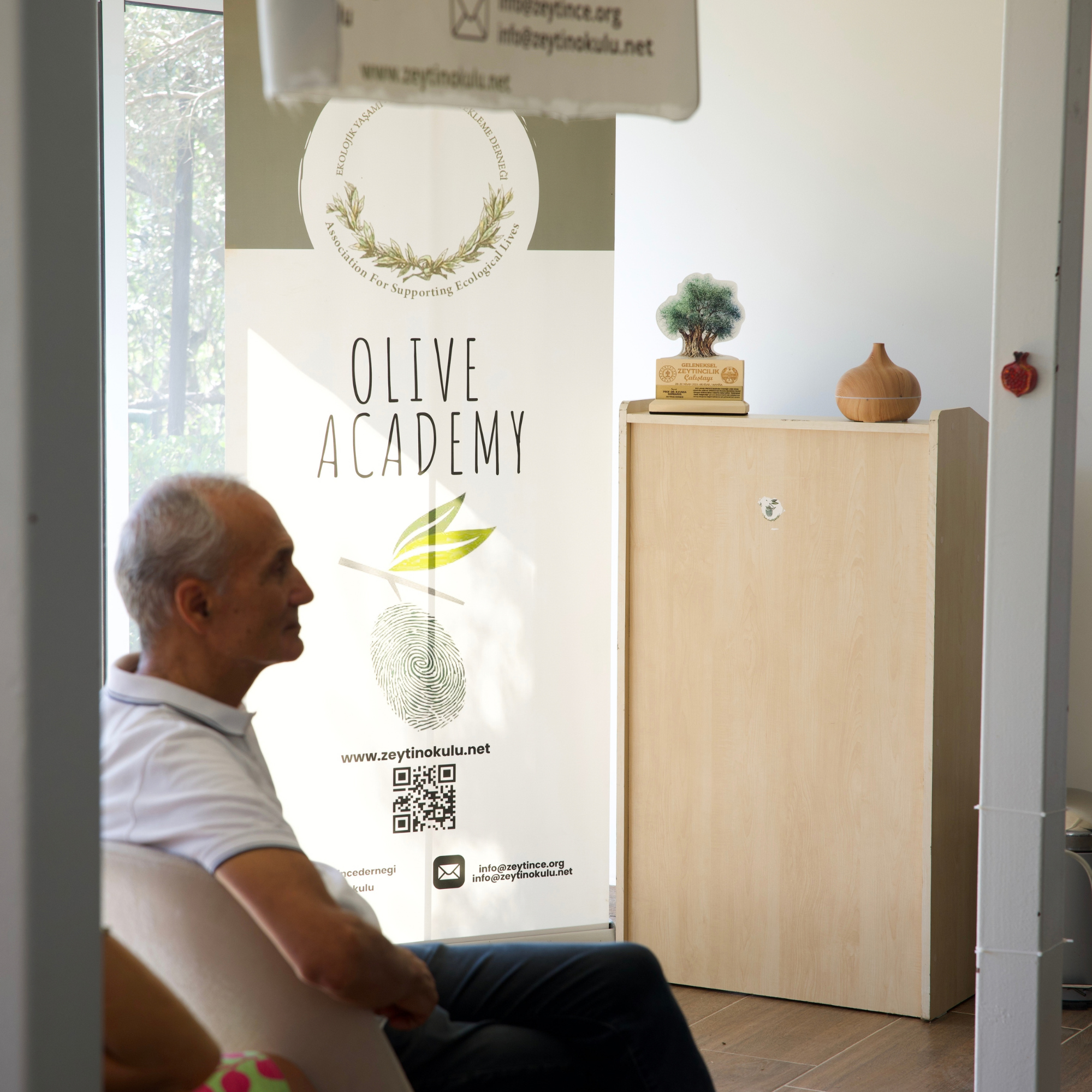
Housed in a former village school in İnecik, Karaburun, Zeytin Okulu (Olive Academy) hosts workshops, seminars and field research on ecology, philosophy, sustainable development and olive culture.
Olive Academy website →
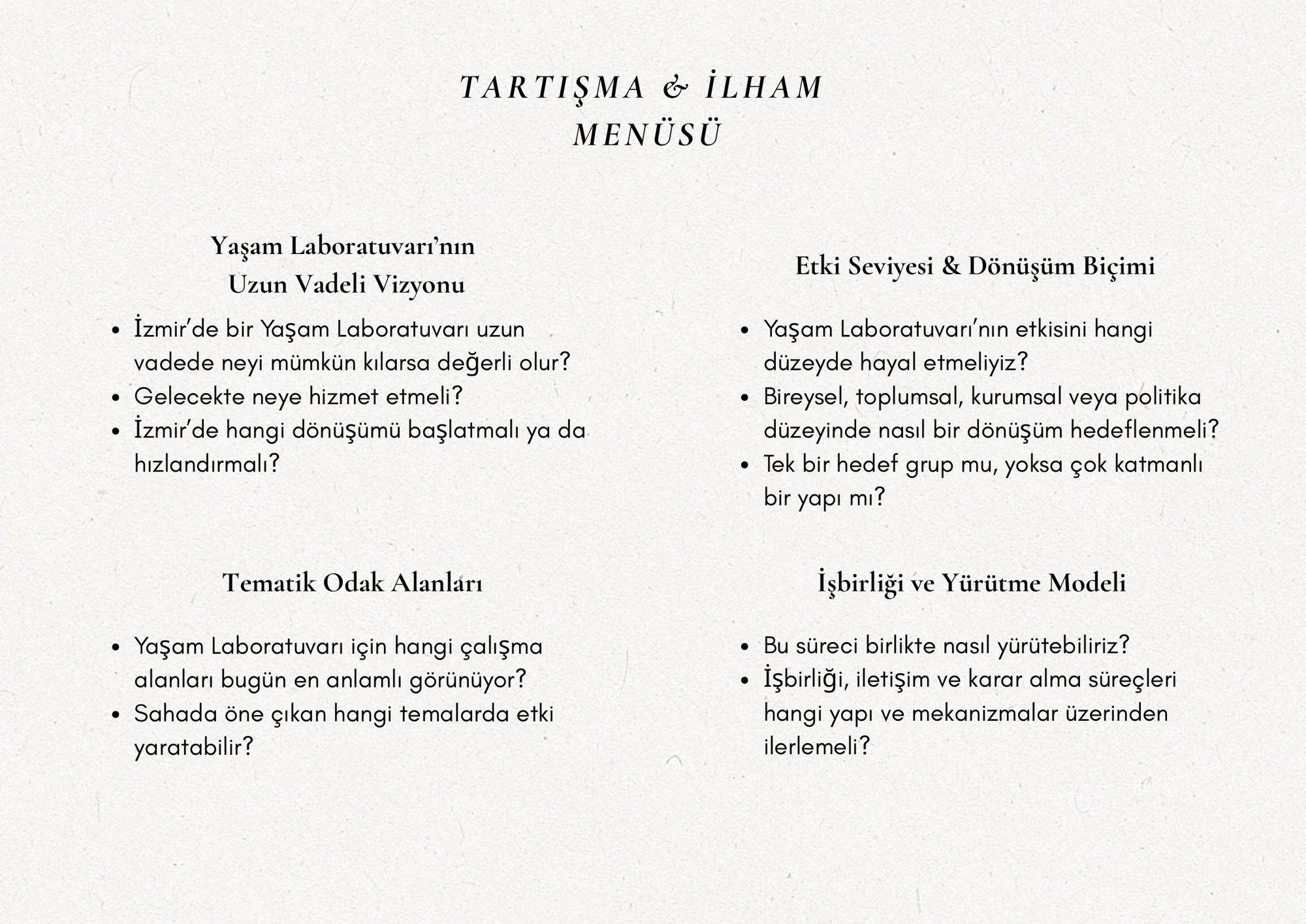
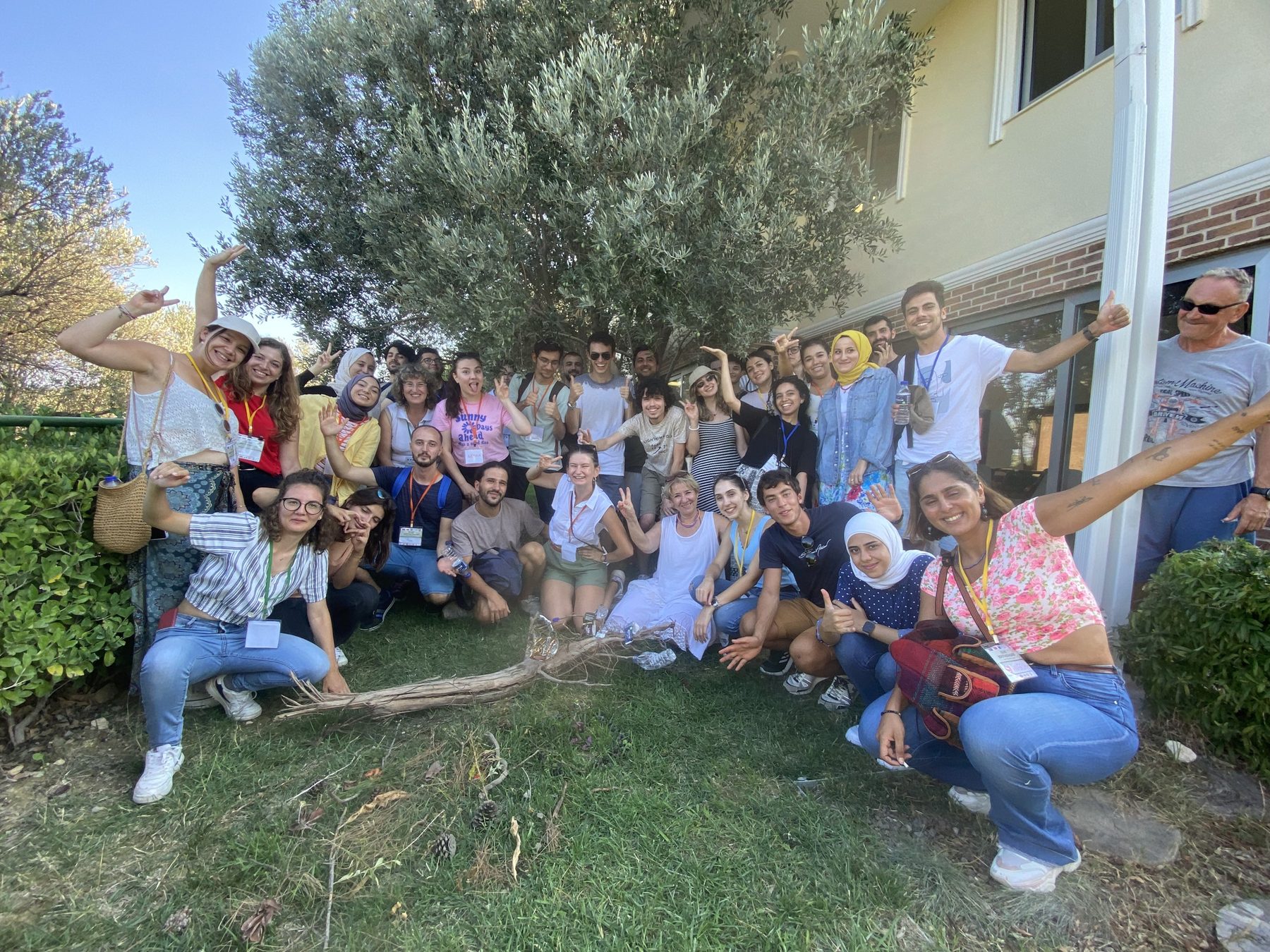
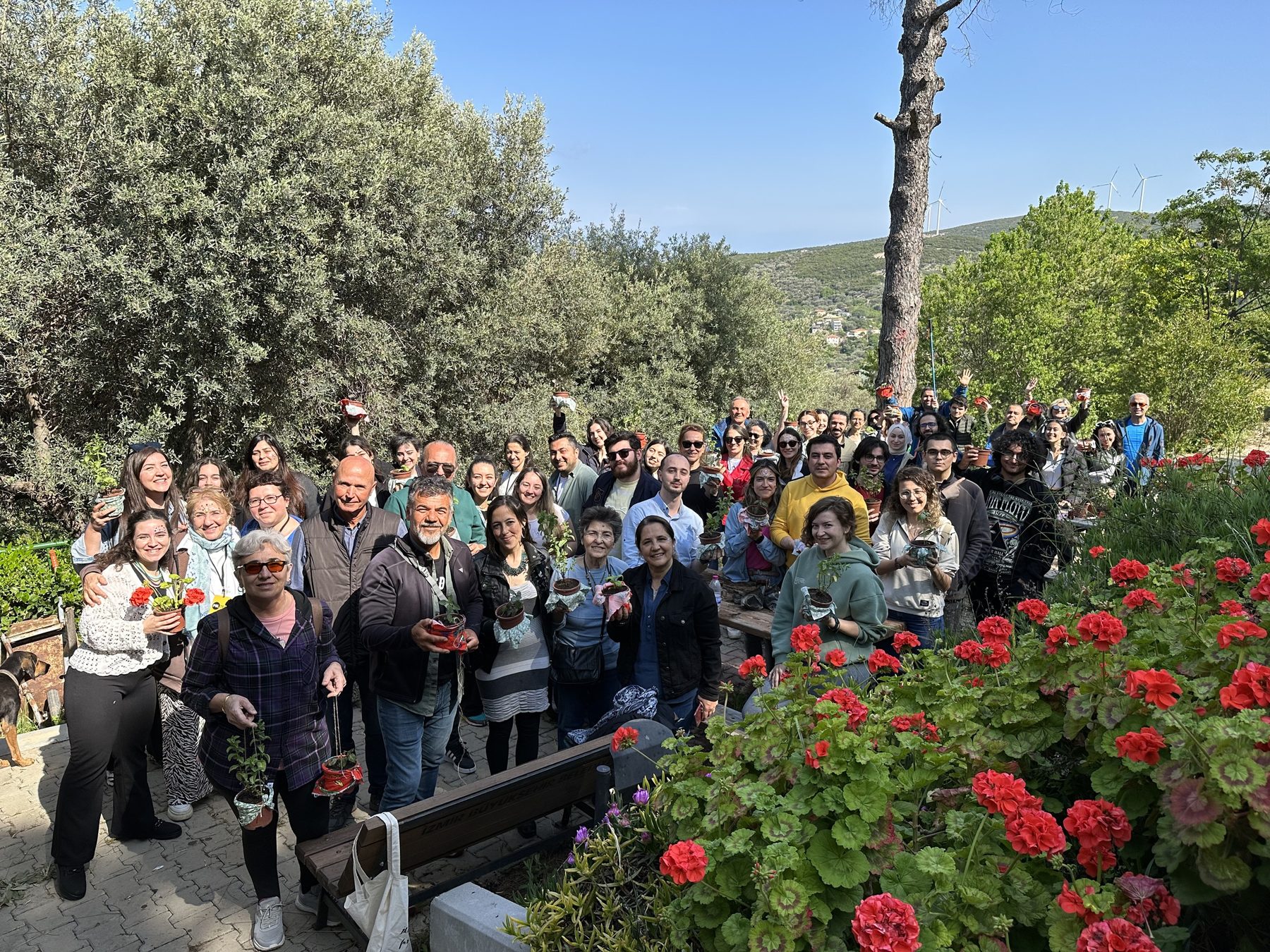
Zeytince decided to establish the Olive School in 2015, choosing Karaburun as its focus area under İZKA's Peninsula Sustainable Development Strategy. An old, disused primary-school building in İnecik Village - empty since 1992 - was leased to the association; with support from İzmir Metropolitan Municipality a new building was constructed in its place, and the school opened in May 2017. Today we run Living Lab workshops, olive-tree pruning training, climate-crisis and ecological-literacy seminars, and cultural-heritage workshops here; it also serves as a stop for walkers and cyclists on the Ephesus-Mimas Culture Route and an information point for the Olive Road, building skilled labour for agriculture and tourism - with a particular focus on women.


By Assoc. Prof. Meneviş Uzbay Pirili, in "The Economy of the Century," Vol. III, Efil Publications, Ankara.


From ecology to cultural heritage — a learning network from the olive tree to Europe.
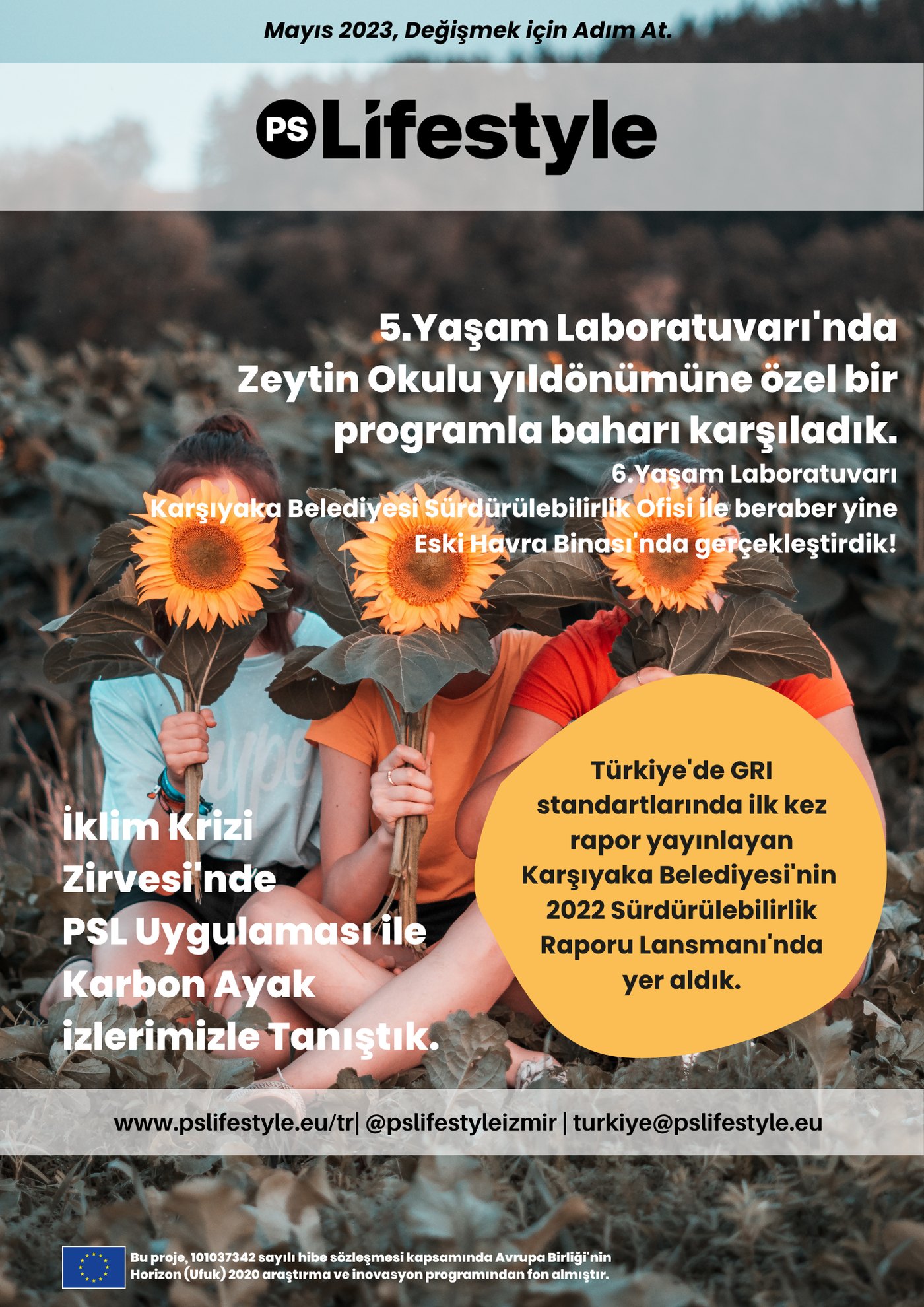
A glimpse into our participatory design, Living Lab methodology and field dissemination work: campaign materials, publications and videos.

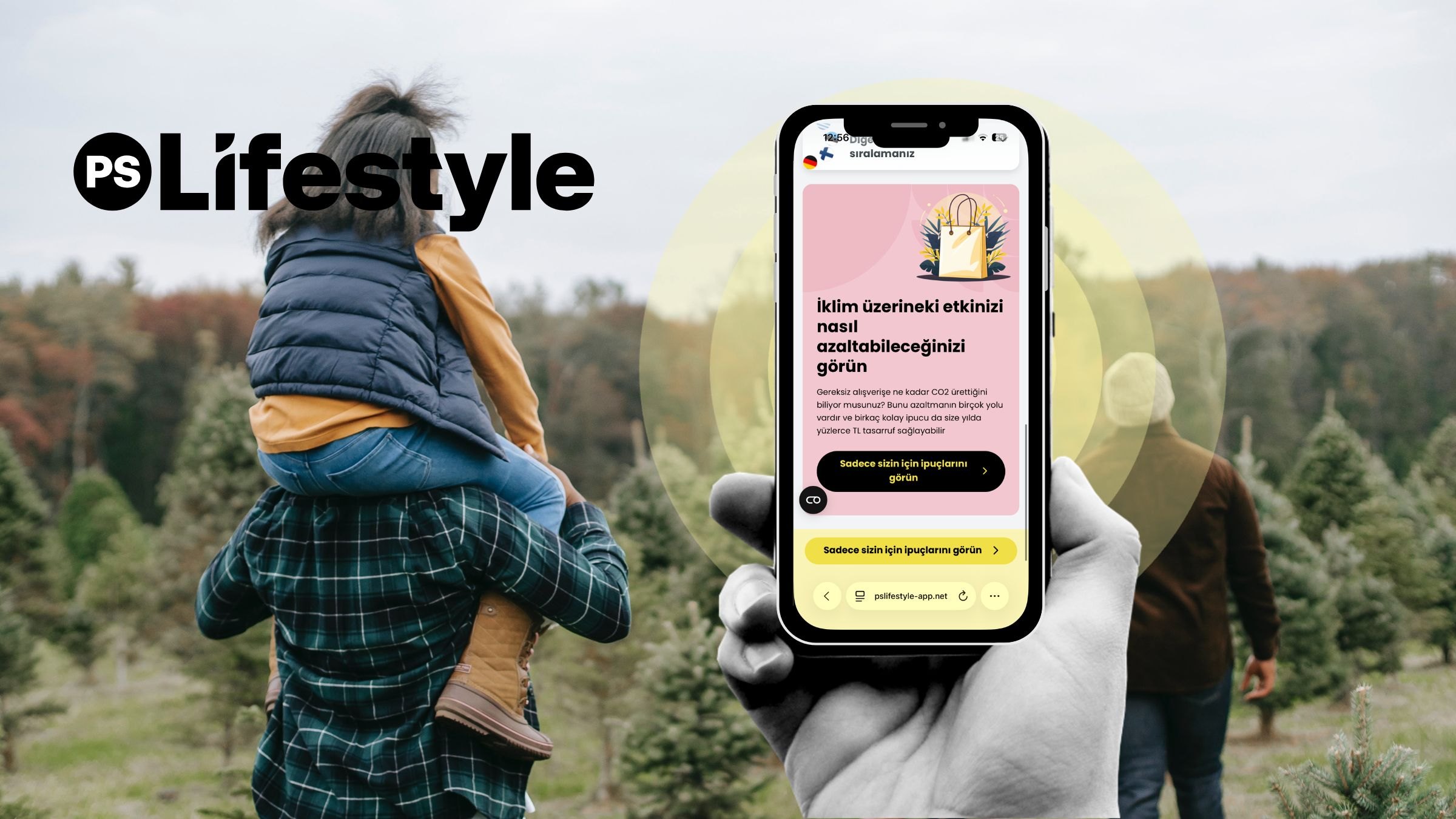
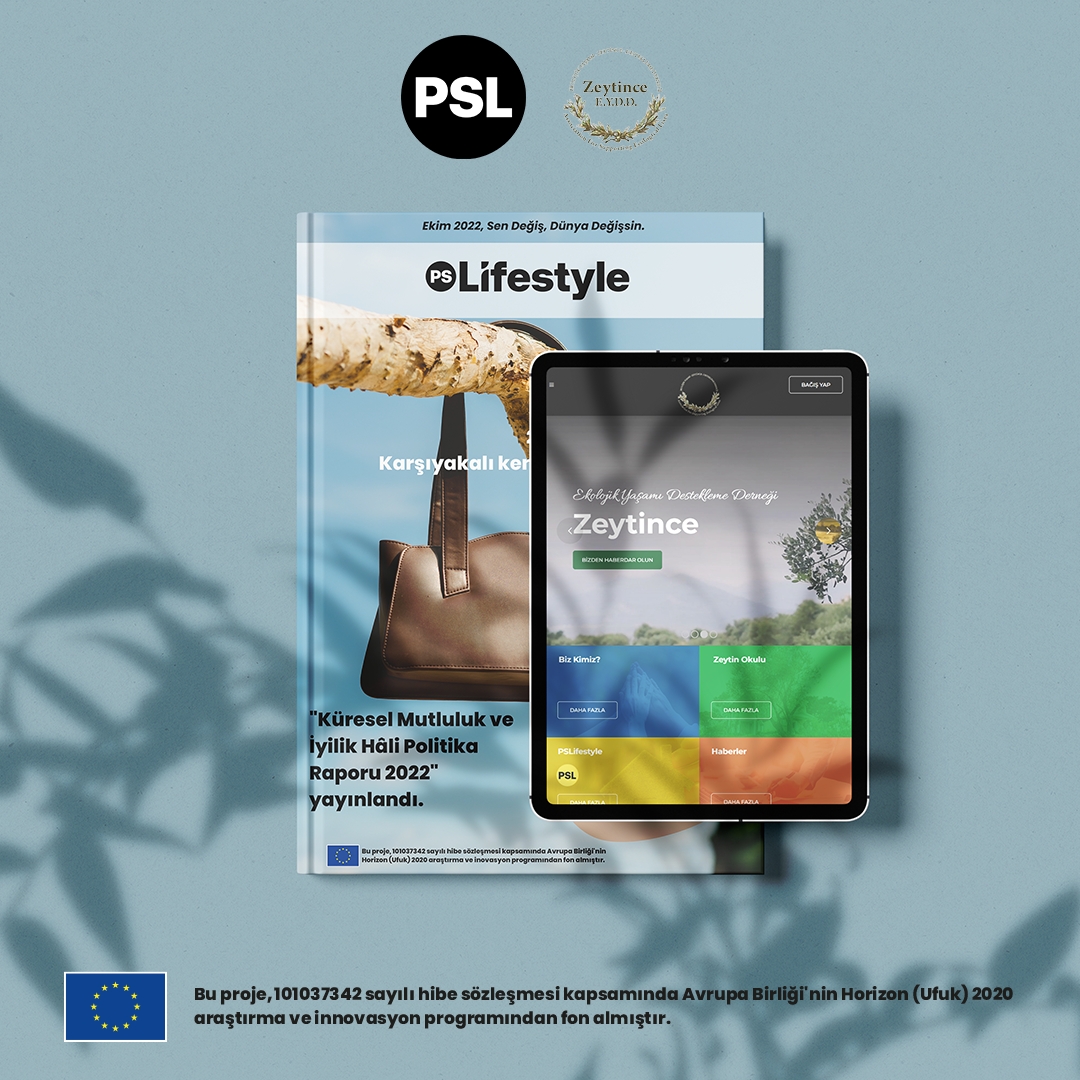
The free Lifestyle Test from PSLifestyle - Zeytince's Horizon 2020 EU project - measures the environmental impact of your daily habits and offers personalised sustainability tips. Used by thousands across 8 European countries.
Take the Test Now →Three programmes municipalities, institutions and schools can apply for.
Our core ecological literacy programme, run with urban stakeholders since 2013.
Measurement, GRI reporting support and sustainability-office setup for municipalities and institutions.
Citizen science programme design drawing on bioblitz and inventory work.


From municipalities to universities, the business world to civil society and international bodies — the partners we learn and build with.